

- Details
EP2
PROF. DIEDERIK DEPLA
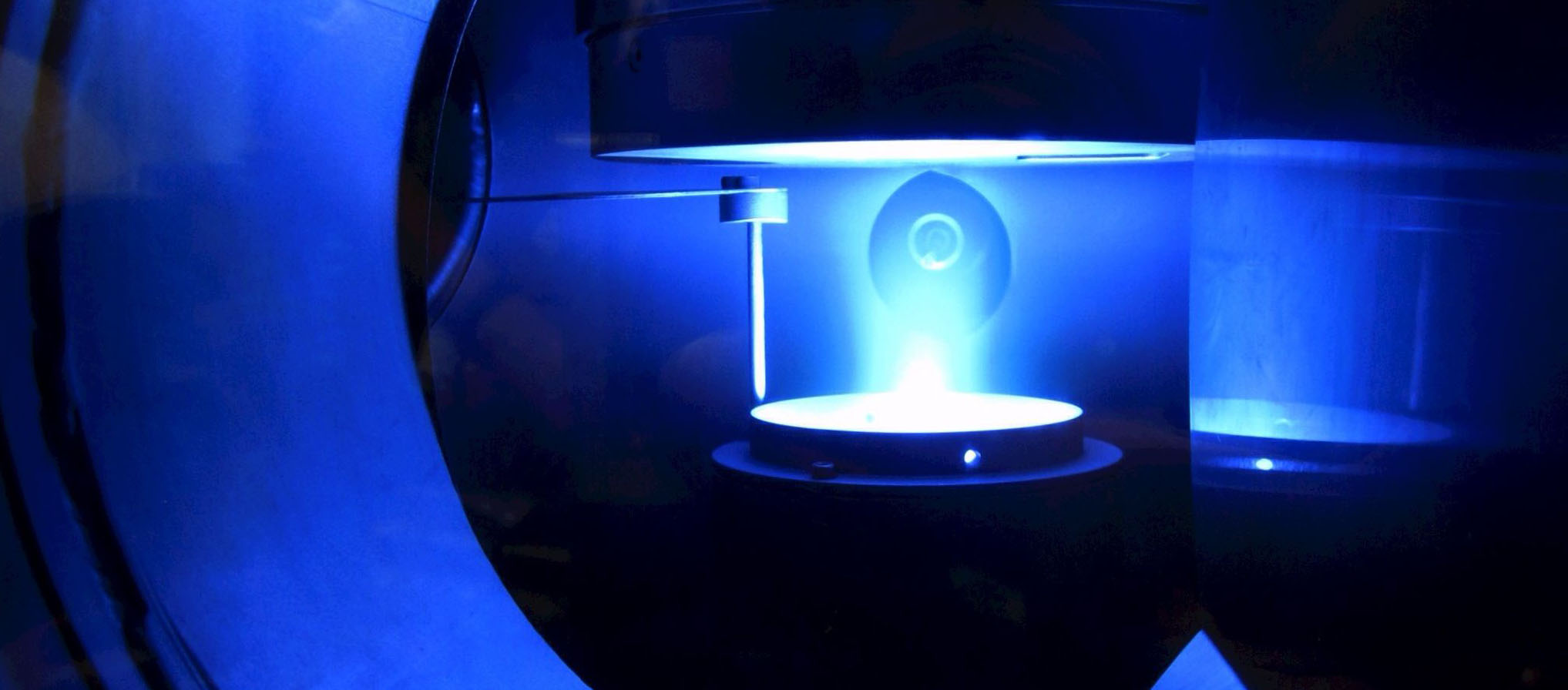
Prof. Diederik Depla from the Department of Solid State Sciences at Ghent University (Belgium) will visit the Institute of Experimencal Physics next week. You are all cordially invited to attend to his short seminar about "Magnetron sputter deposition, the role of the ions" on Tuesday January 15th, 2013, NB5/158, at 10:00 (s.t.).
Abstract: Ions play an prominent role during reactive magnetron sputtering. Their influence can be quite explicit as for example when a substrate bias is applied during thin film growth. However, ions can also play a more hidden role. This paper aims to give an overview of the different processes in which ions play a key role.
The first, and most obvious during magnetron sputtering, is of course the sputter process as such. Although it seems straightforward to describe this, fundamental issues as the angular emission profile, compound sputter yield hampers a quantitative description of the deposition profile, and therefore the deposition rate at the substrate [1].
A similar question exists about the role of ions during the sustaining mechanism of the magnetron discharges. In recent years, substantial progress has been in the understanding of the behaviour of the electron emission yield when oxidizing the target [2]. As the latter behaviour also influences the emission of negative oxygen ions, a good understanding is needed because high energetic negative oxygen ions affect in an important way the growth of the thin film. A few examples of this behaviour will be given [3].
As the ions bombard the target, they also become implanted. For inert gas atoms, their influence is minor. However, reactive ion implantation is an important pathway in the poisoning mechanism during reactive magnetron sputtering [4]. The paper will discuss the latest trends in the modelling of this process.
Finally, ions can be used as a tool to influence the thin film growth. As they are charged species, their energy can easily be influenced by biasing the substrate. Moreover, they can also be guided towards the substrate. This approach becomes even more interesting when most of the metal species are ionized as in HIPIMS plasmas. However, when studying thin film growth, one must realize that not only the ions are important, and other species play also their role. This will be discussed in the context of the characterisation of the different particle fluxes from the plasma towards the substrate [5].
[1] Deposition of thin films by sputtering cold isostatically pressed powder targets: A case study. F. Boydens, W. Leroy, R. Persoons, D. Depla. Phys. Status Solidi A, 209: (2012), 524-530
The correlation between target surface morphology and sputter deposition rate, F. Boydens, W.P. Leroy, R. Persoons, D. Depla, paper accepted in J. Phys. D : Appl.Phys.
[2] Magnetron sputter deposition: Linking discharge voltage with target properties, D. Depla, S. Mahieu, R. De Gryse, Thin Solid Films 517 (2009) 2825–2839
[3] Modeling the flux of high energy negative ions during reactive magnetron sputtering, S. Mahieu, W. P. Leroy, K. Van Aeken, and D. Depla, J. Appl. Phys. 106 (2009) 093302
[4] Rotating cylindrical magnetron sputtering: Simulation of the reactive process, D. Depla, X. Y. Li,S. Mahieu,K. Van Aeken,W. P. Leroy, J. Haemers, R. De Gryse, A. Bogaerts, J. Appl. Phys. 107 (2010) 0113307
[5] Sputter deposited transition metal nitrides as back electrode for CIGS solar cells, S. Mahieu, W.P. Leroy, K. Van Aeken, M. Wolter, J. Colaux, S. Lucas, G. Abadias, P. Matthys, D. Depla, Solar Energy 85 (2011) 538–544
- Details
TET
PROF. MIKHAIL BENILOV
On January 7, 2013, Prof. Mikhail Benilov from Universidade da Madeira will give a talk on "Multiple steady-state solutions in the theory of DC glow and arc discharges and simulation of cathode spots". Place and time: ID 04/401 at 12:00. All interested parties are cordially invited.
- Details
GROSSE AUSZEICHNUNG FÜR PROF. PADMA KANT SHUKLA
Prof. Dr. Dr. h.c. Padma Kant Shukla (International Chair der Ruhr-Universität) wird mit dem „Hind Rattan“-Preis ausgezeichnet, zu Deutsch „Juwel Indiens“. Der indische Premierminister Dr. Manmohan Singh vergibt den Preis zusammen mit der NRI Welfare Society of India jährlich an etwa 30 Mitglieder der weltweiten indischen Diaspora, d.h. im Ausland lebende Inder (NRIs) oder Personen mit indischem Ursprung. Die Auszeichnung würdigt den außergewöhnlichen Beitrag und die Verdienste von Prof. Shukla in seinem Arbeitsbereich, die Indien in der Welt sichtbar machen. Die Preisverleihung wird auf dem „32nd International Congress of NRI's“ vom 24. bis 28. Januar in Neu-Delhi stattfinden, an dem regelmäßig internationale Botschafter und bedeutende Mitglieder der indischen Regierung teilnehmen.
"Die RUB war meine Bestimmung"
Padma Kant Shukla wurde 1950 in Tulapur (Indien) geborgen und zog nach Europa, als er 21 Jahre alt war. „Die Ruhr-Universität war meine Bestimmung“, sagt der Physiker. „Hier habe ich all meine wissenschaftliche Arbeit gemacht.“ Er forscht an einer Schnittstelle zwischen Astrophysik, Plasmaphysik und Physik der kondensierten Materie und hat seine Ergebnisse in zahlreichen Artikeln in hochkarätigen wissenschaftlichen Zeitschriften publiziert, u.a. Nature und Physical Review Letters. „Als ich hörte, dass ich den Hind Rattan-Preis bekomme, hat mich das sehr bewegt. Niemals hätte ich mir das erträumt“, so der heute 62-jährige RUB-Forscher.
Internationale Beziehungen
Padma Kant Shukla wird auf dem NRI-Kongress die Interessen Deutschlands und der Ruhr-Universität vertreten. Er ist seit 1993 deutscher Staatsbürger und hat seit 2010 den International Chair der RUB inne. Als „Botschafter“ forciert er die grenz- und fachüberschreitende Vernetzung der Universität, um die Wertschätzung der RUB im Ausland weiter zu erhöhen. Padma Kant Shukla ist ein hoch dekorierter Wissenschaftler mit exzellenten internationalen Kontakten. In den vergangenen Jahren hat er zahlreiche Auszeichnungen und Ehrungen für seine Verdienste erhalten. Besonders herausragend ist zum einen die Nicholson-Medaille, die er im Jahr 2005 als erster Westeuropäer überhaupt bekam. Zum anderen wurde Shukla im Herbst 2006 als erster deutscher Staatsbürger in die Physikklasse der Königlich Schwedischen Akademie der Wissenschaften berufen, der nur wenige ausgewählte Wissenschaftler aus aller Welt angehören. Als Mitglied der Akademie nominiert er Physikerinnen und Physiker für den Nobelpreis und berät das Nobelpreis-Komitee.
- Details
Orléans
07.12.2012 - JUDITH GOLDA & DR. VOLKER SCHULZ-VON DER GATHEN AM GREMI IN ORLÉANS
Master-Studentin Judith Golda und Dr. Volker Schulz-von der Gathen besuchten Remi Dussarts Groupe de Recherches sur l'Energétique des Milieux Ionisés (GREMI) an der Université d'Orléans.
Judith Golda ist vom 19. November bis zum 14. Dezember am GREMI, Volker Schulz-von der Gathen vom 7. bis zum 12. Dezember.
- Details
Atlanta
06.12.2012 - HENDRIK BAHRE AM GEORGIA INSTITUTE OF TECHNOLOGY
Vom 19.11.12 bis 14.12.12 besuchte Hendrik Bahre für vier Wochen Dr. Samuel Grahams Forschergruppe "Electronics Manufacturing and Reliability Laboratory" am Georgia Institute of Technology in Atlanta, Georgia (USA). Im Vordergrund der Kollaboration stand dabei das Abscheiden ultradünner, hochdichter Gasbarriereschichten mittels Atomlagenabscheidung (ALD) und physikalisch verbesserter chemischer Gasphasenabscheidung (PECVD).
- Details
Junior scientist event WELTPP-15
The 15th Workshop on the Exploration of Low Temperature Plasma Physics (WELTPP-15) will be held on November 22nd and 23rd, 2012 at the old convent Rolduc in Kerkrade. This workshop is intended for active scientists working in the field of low temperature plasma physics.
http://www.tue.nl/fileadmin/content/faculteiten/tn/PMP/Guidelines__PMP__TuMo_/announcement.pdf
- Details
Minneapolis
21.11.2012 - VISIT TO UNIVERSITY OF MINNESOTA, MINNEAPOLIS, USA
From 5th to 10th of November 2012, Dr. Ilija Stefanović has visited University of Minnesota, Department of Mechanical Engineering. During his stay he visited labs of Prof. U. Kortshagen (Si nanoparticle formation form low pressure, low temperature plasma), Prof. S. Girshik (nanoparticle formation form high pressure plasmas), Prof. D. Pui (aerosol production, filtration and separation) and Prof. P. McMurry (theoretical and experimental studies of aerosol systems and aerosol instrumentation).
He also reported about research on nanoparticle polymerization in low temperature RF plasmas in Research Department “Plasmas with Complex Interactions”. The future collaboration on nanoparticle sampling form atmospheric pressure microplasma has been discussed.
The Department of Mechanical Engineering of University of Minnesota is the world top institute for aerosol sampling and instrumentation. Beside of that, there is several plasma techniques developed for production, processing and handling of nanoparticles for industrial applications.
University of Minnesota, Department of Mechanical Engineering
- Details
GASEOUS ELECTRONICS CONFERENCE
30.10.2012 - 65TH GASEOUS ELECTRONICS CONFERENCE
The 65th Annual Gaseous Electronics Conference was held October 22 to 26, 2012 at the AT&T Conference Center on The University of Texas at Austin campus in Austin, Texas. Several members of the RD Plasma participated in the GEC.
- Details
17. European Summer School
17. European Summer School, Physikzentrum Bad Honnef, 6.-13. Oktober 2012
“Low Temperature Plasma Physics: Basics and Applications” (6.-11. Oktober) und Masterclass "Plasma and Envorinment" (12./13. Oktober)
http://www.plasma-school.org/
- Details
York
01.10.2012 - VISIT OF DANIEL SCHRÖDER AT THE YORK PLASMA INSTITUTE
From September 23rd to September 26th, 2012, PhD-student Daniel Schröder from project A1 visited the group of Professor Timo Gans at the University of York. His group is investigating the physics of low temperature plasmas at low and high pressures and is resident at the York Plasma Institute.
Within the already well-established cooperation, common experiments in the field of high pressure micro-plasmas for bio-medical applications have been planned. Complementary laser-based diagnostics together with optical emission spectroscopy are used to develop a deeper understanding of the production of reactive species in jet-like discharges and their interaction with biological materials. A return visit is planned for spring 2013.
- Details
nanoparticle production and nanostructure processing
27.09.2012 - ALUSHTA WORKSHOP „NANO- AND MICRO-SIZED STRUCTURES IN PLASMAS“
The Workshop „Nano- and micro-sized structures in plasmas“ has been organized from 17th to 22nd of September 2012 in Alushta (Crimea) Ukraine, as a part of collaboration between Institute for Experimental Physics II (Bochum) and V. N. Karazin Kharkov National University (Kharkov, Ukraine). During one-day session, several invited lectures and progress reports on various aspects of nanoparticle production and nanostructure processing in reactive plasmas have been presented. Young scientists have been encouraged to take part in a poster session with their original work. Among the numerous applicants, the six best contributors have been financially supported for their travel expenses. Two contributions form Bochum have been presented: Dr. Ilija Stefanović gave a lecture on “Fabrication of Nanopowders in RF Plasmas: Diagnostics and Modelling” and PhD student Thomas Gautier reported on “Titan’s Aerosol Analogues Produced by RF Plasma”.
This workshop has been organized as a part of International Conference & School on Plasma Physics and Controlled Fusion and its organization has been financially supported by Alexander von Humboldt Foundation.